‘Thappad’ – Just a slap

In February 2020, while watching the Hindi movie “Thappad”, I got reminded of my friend Mayankita whose life story was not exactly like Amrita, the lead character of this movie, but the life changing moment for her too was “Thappad” (just a slap). Not all stories with episodes of violence in marriage end the way they ended for Mayankita or Amrita. There are many Mayankitas out there who continue to stay in the marriage trying to make them happier, some succeed too. But we’ll reflect on those stories in my next blog.

Her love marriage:

Mayankita met Mayank through a common friend and he, very soon, reached out to Mayankita’s father, proposing a marriage. This was a surprise to the family but a very easy solution to any father’s struggle to marry off his daughter without any dowry. Besides no dowry advantage, Mayank’s family was highly educated and reputed. What else would a father look for? The marriage was fixed.
Before engagement, Mayankita got a job in a prestigious institution, and she used to commute to work with friends. Mayank did not want her to be seen anywhere with any of her male college friends or colleagues at work. Within the first few months of the marriage being fixed, Mayank’s possessiveness started suffocating Mayankita. Perhaps she realized that her decision was a mistake, but the marriage was already announced. “What will people say”, “family’s prestige”, “mother’s health” etc were in her mind all the time and she could not think of putting her father to any shame. She went ahead for a love marriage in which ‘love’ had already gone missing.

Marriage without love:

Like most working girls, she quit job to relocate with Mayank to a different city and stay with his family. In this marriage and life as a daughter in law of the most well-known family in the town, everything was beautiful except her relationship with her spouse. Difference in value systems continued to be an issue of clash all through. Soon she started missing work and frustration pushed her towards smoking with Mayank. Cigarette became her new friend in this lonely life. She started losing her beautiful voice (she was a very good singer) but she was unable to bear the mounting frustrations. And finally, one fine afternoon, within eight months of her marriage, she gave up and attempted suicide. However, she was hospitalized and survived.

Things deteriorated between the couple with the shame she had brought to the family through her attempted suicide. However, this step made her father-in-law realize her loneliness and he started spending time with her and became her new best friend. Mayankita always talked very high of this new father in her life. He had very easily replaced uncle (Mayankita’s own father) with more love and affection. I would like to talk about this father-daughter (in-law) relationship, but in a separate blog. While things worsened between the couple, father helped her look for a job. Once she got the job, she started to think that if things did not improve in her marriage, she could walk out of the marriage without being a burden on her family back home. Destiny had planned something else for her. Before she got her first salary, she received the news of her father’ demise. She was shattered and there was no looking back. A new beginning full of compromises started and she decided to try and work things out in her marriage.

Just a slap??

On a rainy mid-August morning when Mayankita came back from tour, their argument took shape of a bad fight. Like every time Mayank threatened Mayankita “I would have thrown you out of the house if you didn’t have my father support”. She could not imagine a day of her life without father by her side and in frustration she was about to open the door of her room to go to the father. She used to share her problems with him and he in return would just keep his hands on her head saying, “I am there, don’t worry”. His hands had the energy to heal all her pain. To prevent her from sharing this with the father, Mayank pulled her back, pushed her on bed and hit her hard—four slaps only.

Lines from her letter:

I remember the lines of her letter, “I cannot recall the moment when he hit me exactly. All that I remember is the realization that I was being beaten up, on my knee and my thighs while I was on the bed. I also remember crying loud, banging my head on the wall and the floor that a so-called empowered woman like me was beaten up. These memories come to me in flash and I do not remember the sequence of events anymore. Am I losing my senses? I will share this with father and leave this place forever with his blessings.

Breaking free wasn’t easy:

The next morning, Mayankita removed all the symbols of marriage (for a Hindu woman—Sindoor, Bindi, Bangles etc). She had become silent and did not speak with anyone about what happened behind the walls in her room. That week, every morning, she put on her lipstick and went to office. None of her colleagues could notice and she also pretended to be normal.

When she got a chance to speak with the father, he, on behalf of Mayank, told her that whatever happened was unfortunate and assured that it would never happen again. For the first time his hands could not heal her. She cried and just said to him that she wanted to leave. He wanted her to take time and then decide. She was already out of the marriage, but she stayed in the house just waiting for the permission from the father to leave. She was sad that she was not able to do anything for happiness of this father whom she loved and respected so much.

Mayankita’s family tried to calm her down. Mayank didn’t want her to leave either and in desperation, he took her to all the people who could counsel her—the psychology professor, the astrologer, the Bhrigu Samhita reader (Bhrigu Samhita claims to contain predictions about current and future lives), the tantric (black magic specialist) etc. Mayank’s friends started visiting to make things right between them. Each of these, professional and personal including Mayankita’s mother, explained, “What has happened once will not happen again”. Nothing worked as she was already out of the relationship. Besides all the wrongs in her marriage, this time, it was the psychological trauma, perhaps from her own inability to hit back or accept that she was beaten by her spouse. She was not able to face herself in the mirror.

For her, the marriage had ended. She was with him, in the same room, for three months, but she was no more his wife. All efforts to heal were useless and staying in the same house for the father was not possible for long as things had started becoming dirty. The day he forced himself on her (marital rape?), she resigned from her job. The resignation made her friends in office realize that things were not fine with her. These friends sat with her during extended lunch hours and beyond office hours to help her talk. Mayankita still feels grateful to these friends and seniors at work who did every possible thing to support her.

In this period, Mayank became more insecure. He could not take the rejection and started accusing her of having extra marital affair. He started calling up her family members and friends putting allegations on her character. She, on the other hand, had become very hard hearted. She had started enjoying seeing him in pain. One day when his pain also didn’t mean anything to her, she asked the father for the permission to leave the house. This last time he understood and allowed her to leave. With his blessing, and the pain of not being able to stay with this father anymore; with the memories of the best man on the earth, she left the house, never to return. They got divorced with mutual consent.

Mayankita used to talk to the father over phone on occasions, especially on his birthdays. She used to miss him, prayed for his wellbeing always. It took her time—several sessions of counselling, and an ISABS workshop—to stop calling and talking to this father and set him free. She has no regrets and it was easy for her to forgive Mayank for the goodness of this father.

Reflections:

‘Just one slap’, turned out to be a life-changing moment for both Amrita and Mayankita. However, while the movie provides scope to reflect on the issues like emotional and psychological effects of that one incident, the unwritten family rules that put the burden of saving the family from disintegration on women, things like ‘what will people say’, and that ‘it happened because he was consumed in anger and frustration’, Mayankita’s story was left open to judgement of each one as they wanted to see and understand. People called her names and looked down upon her and her character.

The only thing that has kept her strong was ‘trust’ of the people of her world—her family and friends. Some of these friends for life have been by her side, believing in her, encouraging her, supporting her in all that she has chosen for herself. One of these friends happens to be her current husband with whom she travels the journey of life successfully. She is a happily married woman now who has no regrets in life. She strongly believes that this journey of hers has made her a stronger and better human being.
Toilet… a brother’s concern

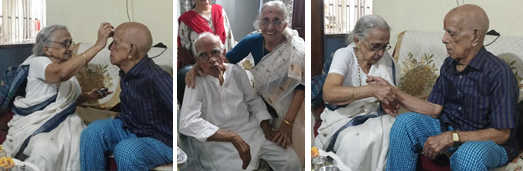
Toilet Ek Prem Katha was a movie released in 2017. The movie is a satirical comedy in support of governmental campaigns to improve sanitation conditions in India, with an emphasis on the eradication of open defecation, especially in rural areas. It is sad that in a country like India, we are still having to negotiate and create spaces for toilets inside the household for safety and convenience of family members, especially women. But I am happy to share the story of my own progressive maternal uncle (mama) who ensured, way back in the year 1956, that my mother got married in a family that had toilet at home. The story in this blog is of this Mayankita, my own mother here, and her brother by her side all her life, till we lost him last year.

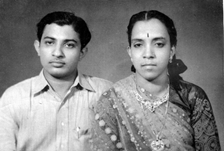
The sister and the brother… few years back

During COVID times, work from home gave me the opportunity to stay with her at home. At 84, when she forgets the most recent things in life, her crystal-clear memories of her childhood and youth are worth documenting and learning from. Born in 1937, she is the youngest surviving child among six siblings in the family (four brothers and two sisters). Her father had passed away when she was less than 10-year-old. She narrates the struggle of her brothers, especially the second one in the birth order, Naini Gopal Kunwar, who was a recognized genius of his times. He was not only a hardworking student but also a very sensitive son who never shied away from helping his mother at home. Retired as a Joint Director, Public Relations Department in Government of Bihar, he was a progressive man with a vision to create spaces for women around. He demonstrated this in his life by ensuring that his spouse (a matriculate at the time of marriage) completed not just Graduation but also a Masters, a B.Ed and an M.Ed degree after marriage. He was a proud husband of a highly qualified working woman and a perfect homemaker too.

Coming back to the interesting story behind Mayankita’s marriage, I used to wonder why she was married after completing 19 years of age, too late for those days when marriage in early teens was the preferred way even in educated families. The most obvious reason that could come to my mind was dowry or absence of a father in her life. But our recent discussions revealed that one of the reasons behind the delay was “Toilet”. As the youngest of all, she was favourite of all uncles and cousins. There were many marriage proposals that were considered, and some were almost finalized. This Mayankita recalls, “Bhaiya used to visit each of these households himself and ask these families for a permission to use their toilet just to be sure of toilet availability. He had rejected many of these proposals on the ground that they didn’t have toilet at home”.

The Brother sister bond for life..
Just married…. 1956

Search for a household with toilet within premises, was an important factor behind her late marriage in those days. For him, his sister having to go for open defecation, in 1950s, was a big “No”. He had visited my father’s home in his village too and availability of toilet and bathroom in the house was one of the important reasons, besides other factors, for his “Yes”.

Reflections:

Our country is still struggling with access to useable toilets within premises, schools, public places etc. We are having to make movies like Toilet, ek prem katha to talk about the issue. It is still struggling with the issue of sensitivity within families for equal spaces for women, their education, their careers etc. Empowering women alone is not the solution. Its time we engage with our men.. because its only men like Mama, who can make a difference, if change has to be realized. If this one man could ensure safe toilet for his sister 65 years ago; if this one man could ensure highest educational degree for his wife 6 decades ago; if this one man could abolish purdah system at home for his daughter-in-laws, ONE MAN today can do anything that is humanly possible… ONE MAN CAN MAKE A DIFFERENCE.

Agle janam mohe bitiya na kijo (don’t make me a daughter in my next life)

I was the youngest daughter of a strict father who looked for lot of discipline and values in his children. Not everyone in the family could talk to him openly but I, being the youngest of all, could dare to atleast speak my mind in front of him. This does not mean that I did not respect him. Babuji was very clear in his mind about the acceptable and not-acceptable behaviour at home. He was the decision-maker, and it was not easy to convince him for anything that he did not approve of.

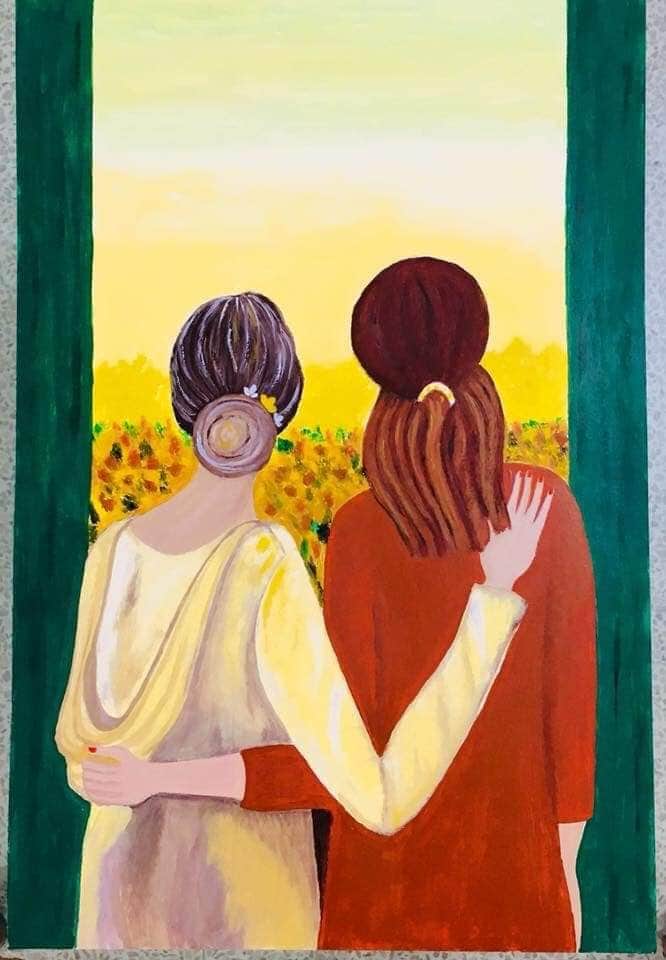
Painting by Srishti Pandey

After my graduation, it was time for enrolling for my Masters. Any level of education or preparation for a competitive exam was fine in the family till it was to be pursued while staying at home. ‘Education first’ was the principle followed and that is why no burden of household chores was on the girls or daughters-in-law of the family (but our mother, on the other hand, ensured that her girls knew all that a good homemaker should know). The only unimaginable thing, in the family was, “staying in a hostel”. I had secured good marks and had heard about career options after pursuing Master’s from Delhi University (DU). I did not dream of administrative services or banking like my other friends and my father’s aspiration for me. But Masters’ degree from DU was a new goal, very difficult to achieve.

A stubborn daughter allowed a chance:

I shared my wish with Babuji who outrightly rejected the request. I did not give up and continued to discuss with my teachers and other people who could influence him. The opinion of my uncles and elders in family was more important to Babuji than anyone else. I, on the other hand, just wanted a chance as admission in DU was not assured; it was dependent on clearing the entrance test followed by an interview. I, the youngest one, the stubborn one of all, wanting to get my request approved, cried and went to the extent of saying, “Once I get a job, I will return all the money that you spend on my education”. I can still remember Babuji’s words, “That day will never come when your father will have to take favours from his children”. He was right, we never saw that day.

Finally, after all the efforts, words of an aunty, a relative who herself was a professor, convinced him not to deny this one chance to me. It was clearly understood that if I did not get selected, I would, like other girls of the family, continue my studies in Patna. We went to Delhi for entrance where some other friends of my college had also come. I was the only one who got selected, that too with 7th rank in the merit list. I immediately got the admission and hostel on priority. Before I left for hostel, Babuji gave me a diary in which on the last page he wrote a Sanskrit shloka, “काक चेष्टा, बको ध्यानं, स्वान निद्रा तथैव च; अल्पहारी, गृहत्यागी, विद्यार्थी पंच लक्षणं (Kak cheshta bako dhyanam, swan nidra tathaiv cha, alpahari, grihatyagi, vidyarthi pancha lakshanam) meaning, a scholar must have five traits—make efforts like a crow, focus on the work like a crane, take alert naps (sleep) like a dog, eat a bit less to avoid lethargy and stay away from comforts of home. I don’t know if I ever lived these words but the journey of my life has certainly brought me close to the ideals he used to teach.

The pain of being born a daughter

I completed my Masters, got a job in a reputed institution in Delhi but my earning was just enough for me to survive there. I could not think of sending any money home. Life was busy with its own twists and turns taking me to different places. Within two years, on a summer afternoon, I received the news of Babuji’s demise. I was away and I could reach home only the next day evening by train. By that time, the cremation was done, and I could not get to see Babuji for that “one last time”. It was perhaps for the first time in my life that I regretted being born as a daughter. Had I been a son, people would have waited till my arrival. Just because I was a daughter, a married daughter, it was acceptable to go ahead with the cremation without me.

I was shattered and all the memories of my arguments with Babuji were flashing in my mind. The most important one was, “that day would never come when Babuji will take anything from his children”. My tears could not wipe this pain of not being able to do anything for my self-respecting father, who allowed me the chance that was not common in our family in those days.

Hindu rituals become restrictive for the male member who does all the last rites. Taking on the responsibility on myself, I tried to do things and manage minor expenses at home during this phase but spending by a married daughter was not acceptable in our family. The rituals were completed and after two weeks it was time to return. With the pain of being orphaned all of us were to part ways to our own worlds. That time my brother came with a cheque, to repay all that I had spent on the funeral. This was the second time in my life that I regretted being born as a daughter. I cried and was more hurt seeing the burden that the society had put on my brother. He was orphaned himself but was willing to pay back to the sister who was no more a family member as per the norms of a patriarchal society. We hugged, we cried and I did not take the cheque but the norms of the society continue to be the same.

I couldn’t do anything for Babuji, but I know that had he been around, he would have been proud of me. Over the years, our sibling bonding grew stronger and I tried to became a pillar of strength for my siblings and our mother. I felt honoured the day my brother introduced me to someone saying, “She’s not my sister, she’s my brother.” But deep inside, I wished that I actually wasn’t born as a daughter of the family. Being a son would have legitimised the responsibility and the ownership that I always felt towards my family.

Reflections:

Girls in our society are brought up to be married off and sent to another family. Even in families where their education is a priority, their careers are still not as important as the careers of the boys who’re nurtured to be the breadwinners of the family. The girls are neither taught to take the responsibility of their parents nor are they expected to do so ever in their lives. Taking money from a married daughter is taken as a sin and the same from a son is a right. For cremation, we need sons and we wait for their arrival as long as possible but when its about waiting for the married daughters, there is no compulsion.

This Mayankita still carries the pain of being born a daughter; had she been a son, she could have seen her father once. She carries the guilt that in her father’s life she was neither expected to support him nor was she able to do anything for him. Even after his death, in whatever little way she was able to do things, it was not acceptable to the society. She has often felt being paid back in cash or kind by the mother for anything she tries to do for her.

Times have changed, there is a lot more that needs to be changed. Why isn’t being a sister same as being a brother, not just in rights but also in responsibilities? I wish all the daughters in our society are taught to take responsibility of their parents and siblings, not as a favour or as an alternative to the failures of the sons in taking the responsibilities but as their own responsibility. Why should the pressure of being a good son, a good brother always be on the boys? Now that the daughters get equal opportunity to study, to make successful careers, equal property rights, they too should take responsibilities equally. That would also be a step towards gender equality. No Mayankita should ever feel, “Agle janam mohe bitiya na keejo”.

The untouchable me… Some more reflections

Reactions to by my previous blog, motivate me to share more on the issue of “the untouchable me”. I received some comments on my blog and many more on my FB page as well as WhatsApp appreciating my effort to initiate a discussion on the topic. Some of my readers think that these practices do not exist in urban areas anymore and the discussions may not be relevant in 2020. Women and men have also come up to share similar personal experiences and having to follow these practices now, even urban India.

Some experiences from my readers

“… it is my personal experience that’s reflected in your words… the only difference is that it happened when I was a little girl… the emotional trauma that majority women experience…”

“… not going far away its practiced in my next-door neighbour educated Marwari family- no entry to kitchen and many other pathetic dos and don’ts.”

“…kudos to addressing the elephant in the room or should I say the rural society. Never heard it myself or around me though.”

“… I love the plot and there are many taboos which exist even now a days. I have to take a head bath when I my periods start and after 5 days too

“… a neighbour who came to give me shagun (gift to newly wed Mayankita in Dec 2019) had so many questions on my periods when I asked her for water or tea. It was embarrassing, offensive, and strange in many ways. What has my serving water or tea has to do with my periods and which part of the month it comes?”

I have not received any comment that would suggest that it is not appropriate to bring out these indoor matters out in public. However, I know that there would be some readers who would be disgusted with the open discussion on the topic and may label it a ‘radical’ or a ‘home-breaking’ agenda. How many of us and our family members can just simply say “NO” to any such demands in our families on the ground that the choice should be left on the woman? How many of us will say “NO” because it is not correct to force a woman to go through these discriminatory practices?

My last blog’s Mayankita understands that the practices once required and relevant as per needs of ancient times do not have any meaning in today’s world and need change. She also understands that it is not easy to unlearn the deeply rooted illogical (in today’s world) and discriminatory practices and she waits for someone else to make that change happen. I don’t want to wait for that ‘someone’. I want to be that someone to begin with. I am sharing some experiences of women related to untouchability collected through personal interactions over the last two decades that continue to exist even in 2020. All of these have been presented as Mayankita’s experiences of menstruation below.  Please reflect :

How relevant are these in 2020?

When the menstruating Mayankita bent to touch feet of a relative in a social gathering, the relative stepped back and distanced herself from her. All the people standing there witnessed this rejection of the gesture of greeting with respect (charansparsh) and Mayankita felt humiliated.

The sick mother-in-law rejected water offered by the menstruating Mayankita because she was impure (sometimes people who’ve not taken shower are also considered impure).

While menstruating Mayankita was allowed to participate in a social gathering, she was not allowed to travel in the same car with her mother-in-law.  

The hungry breastfeeding mother, Mayankita, had to wait for her mother-in-law to finish her household chores to give her something to eat. She could not enter the kitchen and take food herself (mother and child are considered impure during the first twelve days of childbirth).

–  A mother, standing with her child in her arms was pulled inside the room so that the menstruating Mayankita passing by (with her wet hair) does not see the child. The child would have lost blood if seen by mayankita before she had food. Ridiculous, isn’t it? But it happened.

Mayankita was pushed out of the kitchen when she entered the kitchen to make tea after touching the newborn baby at home. She was expected to take shower after touching the child. I wish people wanted her to ensure hygiene before touching the child.

The menstruating Mayankita could not participate in marriage rituals of her niece. She could only peep from a distance. Wasn’t her blessing important?

Mayankita could not participate in the last rites of her father despite being at home because she started with her periods. Was her pain less?

Mayankita was diagnosed with PCOD. Her mother thinks that she must have thrown the used sanitary napkins in dustbin on which a snake must have crossed. Its believed that a snake over the soiled napkins causes gynaecological problem.

Mayankita was not given mattress or pillows at home for 11 days when she came back from hospital after her C Section delivery. She used to put bedsheet under her head and her child’s head. She did not want to create an unpleasant situation at home.

Mayankita was given medication to postpone periods every time there was a function or a religious festival at home. She later developed hormonal problems.

Mayankita arrived home after an outstation tour in the morning and hugged her aunt who was ready to leave for the temple. The aunt’s clothes became impure and needed to be changed before going to the temple.

Mayankita’s grandmother shared her desire that on Mayankita’s Menarche (the first menstruation), she must be made to observe the seven days rituals followed by a feast. What if the mother does not follow? Will she be a bad daughter-in-law?

Its time Mayankita learns to say ‘No’, will you?

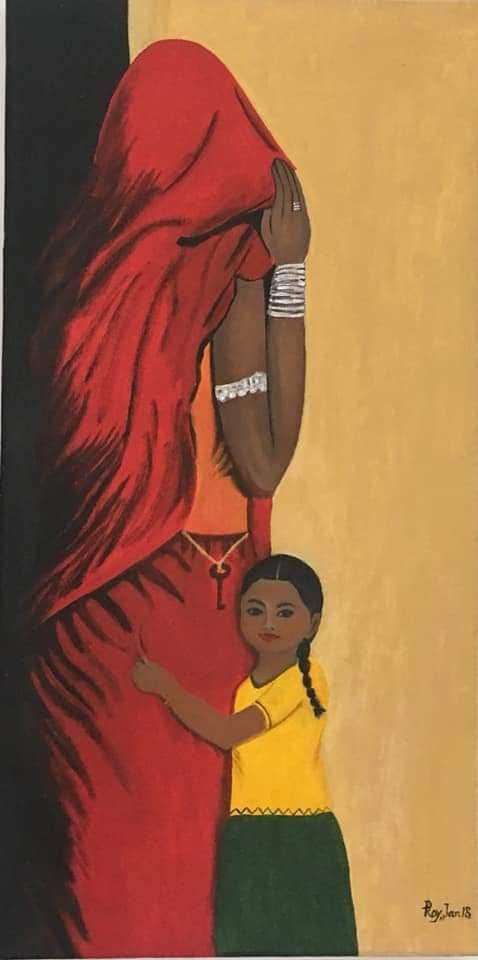
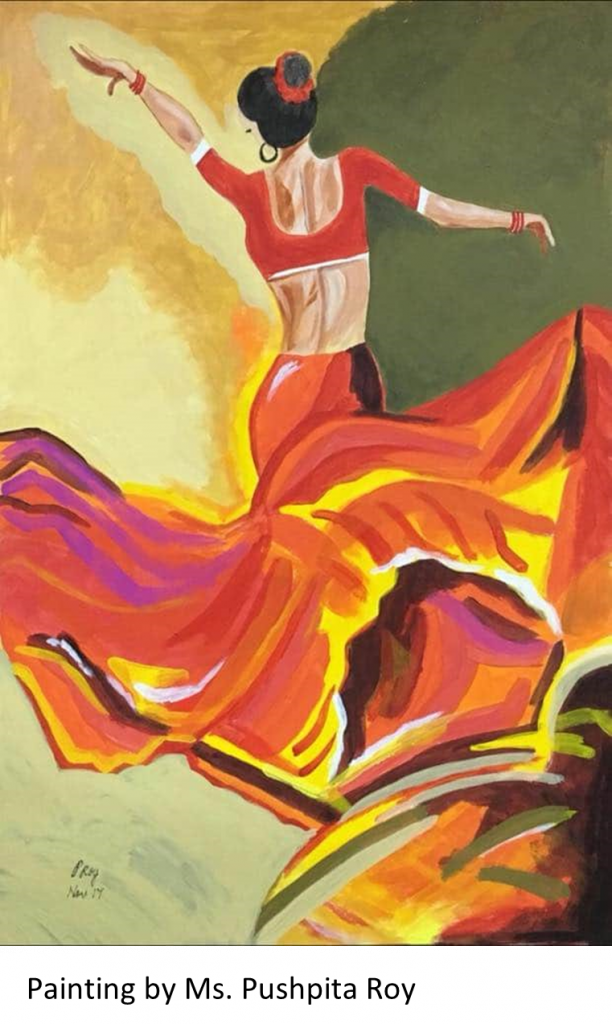
Painting by Ms. Pushpita Roy: My Mayankita has me by her side; I will help her say “No” to the discriminatory norms and practices; I will help her make that choice, will you?

The above experiences are real and from the present times only. They still exist in our society as narrated above and are not exceptional or rural cases. Some of them are ridiculous but they exist. They exist not only in Odisha or south India but different parts of the country. My survey got 142 respondents from seven states and the awareness on these menstrual taboos was not very different across these states.

Many Mayankitas feel humiliated, rejected, but they have no choice other than following these practices and taboos, even in urban India. There are others who resist and create spaces for their choices but are judged and labelled ‘bad’. Its not easy to be labelled ‘bad’ and yet be ‘good’, is it?

Its time we start saying ‘No” and ensure that no more Mayankita struggles for her share of the “CHOICE”. Through open discourse, both boys and girls must be educated not only about the biological aspects of menstruation but also about these norms and practices, their relevance or irrelevance in today’ world.  Mayankitas today, should not be made to skip school, sports or functions because of a simple biological function that makes her a woman. She cannot be treated as an untouchable or impure because of the reason behind the human existence— Menstruation.

“The untouchable me… Mayankita”

In March 2020, Mayankita had come to home to accept a consultancy assignment after maternity break. With identification of a Corona positive cases in the office area, the offices got closed and she had to extend her stay to complete the formalities in the coming week. Her periods were due this week and she was scared because she had heard about the untouchability associated with menstruation in her in-law’s home and was not sure how she would handle it. During one of her earlier visits, she had seen one of her sister-in-laws being given ‘haldi (turmeric) and ‘gobar’ (cow dung) to be put in water before taking head bath on getting periods. To avoid going through this herself, she used to plan all her home visits on days she would not menstruate by taking pills and manipulating the cycle. This time she was stuck.

Her dilemma:

Her fears came true and she got her periods. She discussed this with Amuli, the domestic help, who suggested her not to tell anyone. Amuli gave her the confidence that she would quietly help Mayankita with disposal of the sanitary napkins without letting anyone know at home. With the fear of the unknown and her own reactions to the practices she had never experienced in life, Mayankita took a stand and decided not to lie. Someday she had to face it and she decided to tell Maa. The moment she disclosed it to Maa, she could see Maa distancing away from her physically. As expected, she asked Mayankita to take head bath and keep the clothes in a corner of the bathroom itself. She was informed that a ‘dhoba’ (the washerwoman) would come and wash them to make them pure again. She had a bad cough so she requested if she could avoid washing her hair. Maa was considerate and she allowed her to avoid washing hair but asked her to put some water on the hair as a ritual of washing. She was also given another privilege of not bathing in water with ‘haldi and ‘gobar’ in it. In her case she was given just ‘haldi’.

The feeling of being an untouchable:

Painting by Ms. Pushpita Roy

She was confused about her emotional state. She was sad that she was going to be treated like an untouchable for the coming five days; everyone in the family would know that she was menstruating. Never in her life she had faced a situation where she had to tell other members of the family about her periods. She was embarrassed because such systems did not exist in her family or in families of all the friends she had known. The only one restriction she was aware of during periods was—not to worship or visit temples. With the pain of all the emotional conflicts going inside her mind, she took shower, washed her hair and the stained clothes. On seeing her put the clothes for drying Maa showed her annoyance as they were to be left in the bathroom and washed by the ‘dhoba’. No logic worked and despite being washed with one of the best detergents, Mayankita had to leave her saree hanging in the corner room. The next day she found the saree washed by the ‘dhoba’ again for purity sake.

The privileges and the taboos

Now was the time for all the dos and the don’ts—Don’t touch everything; whatever you use or touch during these days will need to be washed by the ‘dhoba’ after five days; clothes will need to be washed by hand (washing machine was barred); don’t enter kitchen or puja room; food will be served, don’t touch food items meant for others; wash your hair on day three (to be able to enter the kitchen) etc. Mayankita was also allowed the privilege of sleeping on the mattress with Shivangi (her two year old daughter) by her side but the empowered and strong woman in her was crying in her heart. All the monsters in her thoughts were laughing loud at her state. Mayankita was running a fever in the night but to avoid creating any unpleasant situation in Mayank’s (her husband) absence, she did whatever she was asked to do.  

Sketch by Albin K. Anthony

For the next two days, her movements were restricted; she could feel that her actions were being watched closely. She was aware of the privileges she was being given and the discrimination she had never thought she could live with. She was allowed to have dinner on dining table but the extra ‘roti’ given to her was dropped in her plate before she could directly take it herself; the tea served to her was kept on the floor and not given to her directly from the tray because the person holding tray would become impure. Mayankita could feel the pain of the so called “untouchables” in the society.

The Lost opportunity—family and work:

She had come home to discover the possibility of getting back to work on an assignment that required only ten days of her time in a month onsite. It was also an opportunity for her and Shivangi to spend time with the family every month. But on the third day, with high fever she had to take a head bath to be pure again. In the night, Shivangi came down with a fever. On the day she was to sign the contract, she sent an apology mail. She turned away from a possibly bright future due to the guilt of having risked Shivangi’s well-being to please the significant others of her world.

Perceptions :

Before returning to the city of her stay before the formal lockdown began, she had a brief discussion with Maa about the practices and menstrual taboos. She shared with her that she had ever known about these practices and was not comfortable following them. The explanation given to her was that when a woman is married, she must follow the customs and traditions of the family she is married into (very similar to what Mayankita’s own mother had taught her). That is how women in the family, including the daughters of the family, have been living. This is expected of every daughter-in-law of the family and if they do not follow, Maa would not force them but would certainly be hurt. She shared her wish that she wanted these practices to be followed atleast till she was alive. Maa also educated Mayankita on how strict things were during her times. Maa shared that she was trying to be a liberal mother-in-law by ignoring so many things and allowing privileges that were not available to women in their times or even women at present in the family. Mayankita’s perceptions, however, were pointing towards the deprivation of the rights that she always had. But she very well understood that the socialization of 50+ years would not just go away in a day.

Her choice:

Mayankita knew that when we talk about changing these deeply rooted beliefs and practices, tied with the chains of culture and tradition, it sometimes takes a lifetime. Women in our country are protected by law but realizing them within the four walls of the households comes with the cost of relationships and Mayankita, perhaps, was not courageous enough to do it this time. She never believed in any of the discriminatory practices against anyone based on religion, caste, or sex but to avoid hurting others, she turned away from a possible future. But she was convinced, that someday, someone would take a stand and righteously make the change possible… if not her. Her choice, this time, was to stay away from the family and visit them only in times she was “pure”, as defined by the system. She was sure, she will never allow herself to go through this feeling of being this “untouchable me” ever again.

This cannot be the end of her journey of being a woman. Avoiding cannot be the solution forever and I am sure she’ll learn this soon, fight the battle and come out a winner. I know of another Mayankita who has chosen to break free by learning to say “No” to things she did not believe in. It wasn’t easy; it came with lot of labels for her in the package.She was hurt and had become unforgiving for a while. But she also learned the art of forgiving and letting go of unpleasant memories for a life full of all the significant others in her world. I will certainly share that journey in one of the following blogs.

Reflections:

These practices are deeply rooted in age old norms and customs, created with a purpose, different from the reality of the modern times. Despite the changes in the roles and lifestyles, women are still considered impure during menstruation and are barred from participating in any religious ceremonies, celebrations, not only in the rural part of the country but also in urban families. Women, even in modern times, are treated like untouchables during menstruation; they are not allowed to use mattress/pillows, touch other things that cannot be washed or things that are associated with the concept of ‘purity’ (like Gods, sacred thread, holy books etc). Even mothers and their newborns are untouchables for the initial few days after delivery. While many of these practices may come as a shock to women from different backgrounds, those who do not practice such rituals, may have to go through the experience of being considered impure, or lesser human beings, or looked down upon, and also discriminated against.

It is observed that while both women and men may believe in standing against such norms at the society level, when it comes to their own families, their mothers/parents/families become more important and they give in to such discriminatory demands to avoid hurting their sentiments. The emotional trauma of being treated as an ‘untouchable’ is of no value and the burden of keeping everyone’s sentiments into consideration again lies on the woman herself. It is not easy for her to overcome the fear of being labelled as “bad” (daughter, daughter-in-law, or a bad spouse) and take a stand. It is also not easy for the woman who derives all her powers within the family by following customs and traditions of the family to let go of them in a day and lose all her power and respect. “What will people say” and “will others approve of it” guide her decision to stick to these customs. The onus of the change, therefore, should lie in hands of their male counterparts. Only they can make it possible. They, however, first need to be aware of these silently existing practices within the households. 

My next blog will present findings of the study that identified 29 discriminatory beliefs/practices/taboos associated with menstruation and tried to assess the awareness of both women and men on these practices in our society.

“The whole existence of life is based on menstruation among women and if the people born out of such a system are valued, how can the blood be impure and how can the woman who is menstruating be impure?”

  1. Like all previous blogs this one is also engaging. Keep this beautiful skill of story telling continue ma’am.

  2. Felt emotional. It has so subtly dealt with the story of thousands of women. Loved the way it is written.…

  3. The pain of the girl has been brought as if you were living that life…n it’s so odd that love…